Inspiration came from:
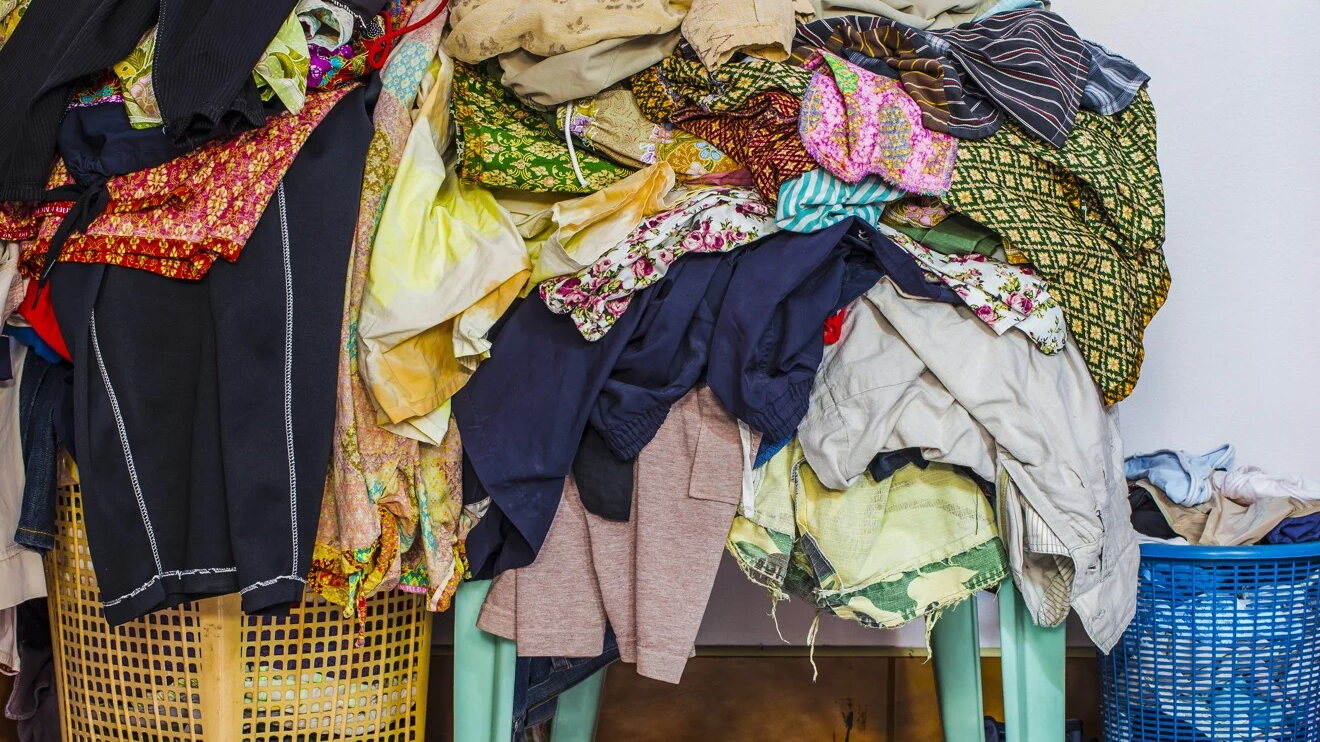
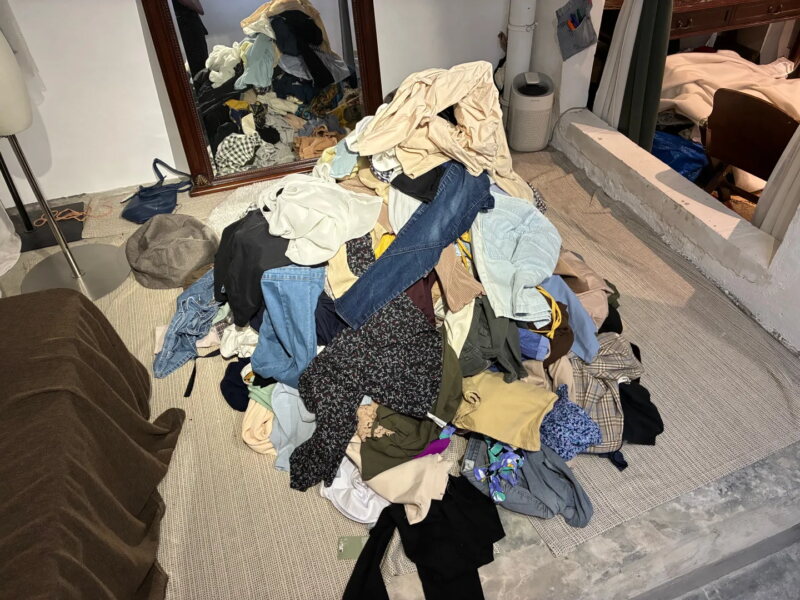
Our inspiration came from noticing how quickly clothes go out of style and end up as waste. We saw piles of second-hand clothes that could still be useful if given a new life. This made us think: instead of throwing them away, why not turn them into something creative and customizable? That idea sparked our project.
What social problems do you solve?
Fast fashion creates pollution, wastes water, and fills landfills with clothes that are barely worn. It is in relations with number 13 of the United Nations Sustainable Development Goals - Climate Action. It is estimated that the fashion industry accounts for 8-10% of global carbon production and is responsible for 20% of all industrial water pollution (BCG 2017; Kant 2012).
Our project solves this by reusing old clothing instead of buying new ones. This is innovative because it encourages creativity and sustainability, while current methods often just throw clothes away. We want to show that fashion can be fun and eco-friendly at the same time.
How do we start from 0 to 1
We first started by having class discussions about the issues that interested us. While there were different ideas, they all seemed to be connected under the UNSDG of Climate Action. Then we focused on the issue of fast-fashion, and how these large clothing companies like Temu and Shein often sponsor Social Media influencers. These influencers then film "haul" content, where it is seen by the public and impressionable students and young folk. As this is an issue that can influence the younger generation, we decided to target this problem.
We started by asking ourselves how we could make fashion more sustainable. The idea grew when we realized we could collect second-hand clothes and redesign them. Practicing it means cutting, sewing, and decorating old clothes to make them unique, multi-functional and customisable. Step by step, we turn waste into wearable art.
The challenges we encountered
At first, we thought about learning to sew with thread, but using needles can be dangerous for Grade 5 students. We even considered inviting someone to host a sewing workshop, but realized it would be hard to master sewing skills in a short time.
The resources we needed
After doing some research, we discovered safer and more kid-friendly materials like velcro, fabric glue, and fabric paint. With these, we can attach zippers and velcros to make clothes customizable without needing advanced sewing skills.
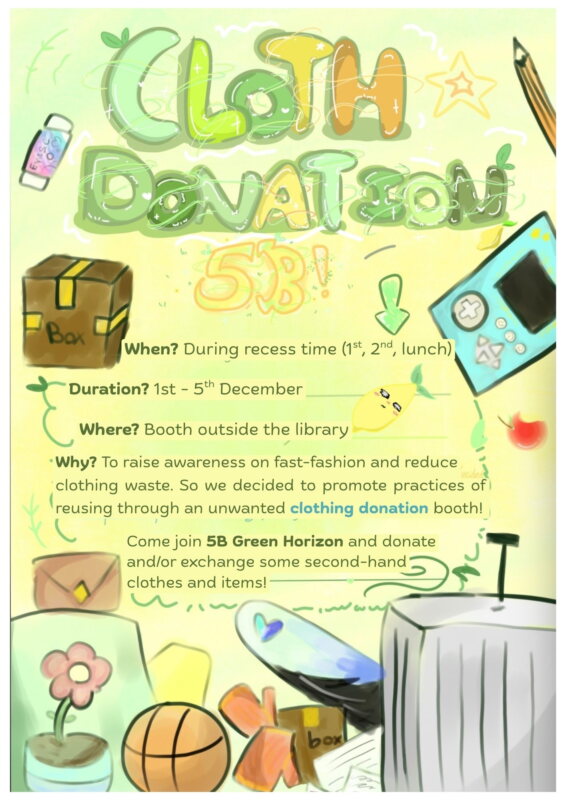
To execute this, we will be collecting second-hand clothing donations by opening a donation booth in our school. As it is a whole-school event, we hope that we can receive many clothing donations, so we can spread our creativity through these materials!
Who are we?
We are class 5B from St. Hilary's Primary School (Tai Po Campus).